What Fails on a Garage Door Opener
An opener is a small motor, a drive mechanism and a control board, and each fails in a way you can hear or see. Knowing which one you have saves a lot of guesswork.
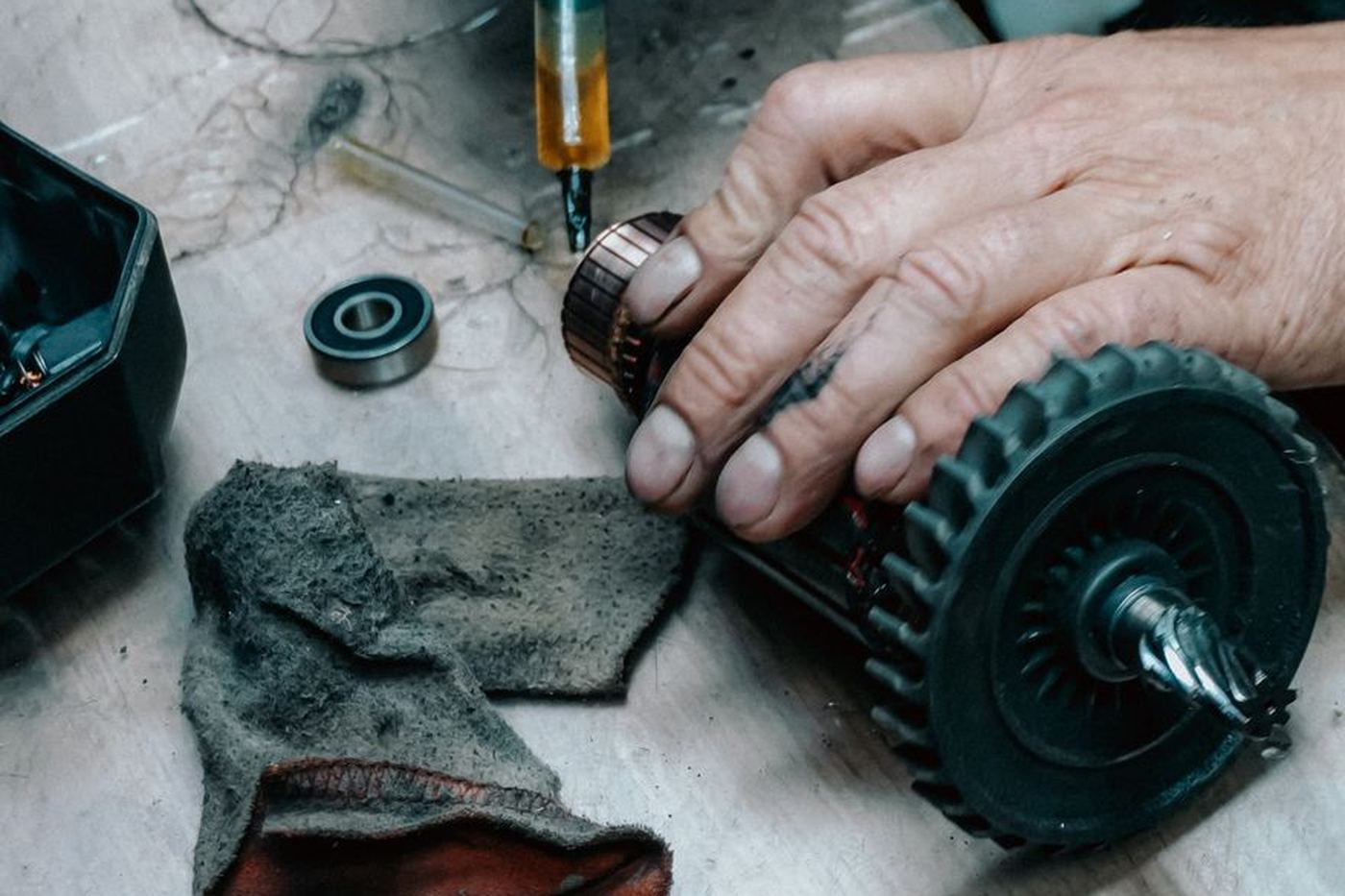
The most common by a distance is the drive gear. Chain-drive and screw-drive openers turn the shaft through a plastic worm gear, and after a decade of Waco summers that plastic has gone hard and brittle. The teeth round off. The motor still runs, so you hear the familiar hum, but nothing moves. Look for fine white or gray plastic shavings on the garage floor underneath the motor head. That is the gear telling you what happened.
Next is the capacitor. When an opener hums for a second and then stops, or starts weakly and stalls, the capacitor that gives the motor its starting kick has often failed. Heat is the usual killer, and an unconditioned Central Texas garage is exactly the environment that shortens their life.
Then the control board. Lightning is a real factor here, and a nearby strike or a surge through the house wiring can take out the logic board without leaving a mark on anything else. The symptom is an opener that has simply gone dead, with no lights and no response from the wall button.
Travel limits and force settings drift over time. If the door hits the floor and bounces back up, or stops short of closing, the down limit is out of adjustment. If it closes but the motor keeps straining afterwards, the down force is set too high. Both are adjustments rather than parts.
The One to Rule Out First
Check the springs before you blame the opener. A motor that strains and gives up is often lifting a door that has lost its counterweight. Look at the shaft above the opening for a two-inch gap in the coil. If you find one, the opener is fine and the problem is a broken garage door spring. Running the opener against a dead spring is what turns one repair into two.
The quick test: pull the red release cord to disconnect the door from the opener, then lift the door by hand. A healthy door moves with modest effort and stays put when you let go at waist height. If it is enormously heavy or slams down, the problem is the springs and not the motor.
Remotes, Keypads and Safety Sensors
Remotes that stop working are usually a battery or a lost pairing. Modern openers use rolling codes, so a remote that has been out of range for a long time or has had its battery out can drop its sync. Reprogramming takes a minute at the learn button on the motor head. Keypads on the outside of the door take direct sun and Waco heat all day, and the membrane behind the buttons eventually cracks and lets water in.
If the door closes only when you hold the wall button down, that is not the opener at all. It is the safety reversing sensors near the floor, and the opener is deliberately refusing to close hands-free because it cannot see a clear beam. Every residential opener sold in the United States since 1993 is required to have them. That one is covered on the garage door sensor repair page.
Repairing Versus Replacing
A repair makes sense when the unit is reasonably modern and one part explains the fault. Gear kits, capacitors, limit switches, trolleys, wall controls and sensors are all straightforward swaps on an opener that is otherwise sound.
Replacement starts to look better when the opener is old enough that parts are scarce, when more than one thing has failed, or when it predates the safety standards. If yours has no photo eyes at floor level at all, it is old enough that replacing it is the right call regardless of what is wrong with it today.
There are three types worth knowing about. Chain drive is the cheapest and the loudest, which matters if there is a bedroom over the garage. Belt drive costs a little more and runs quietly, which is the usual choice on attached garages. Wall mount, or jackshaft, openers bolt beside the torsion shaft instead of hanging from the ceiling. They free up overhead space, they suit high or vaulted garage ceilings, and they need a torsion spring setup rather than extension springs.
What a new opener should come with
- Rolling-code remotes, so the code changes on every use
- Photo eye sensors and a working auto-reverse
- A manual release that actually reaches, on a cord you can find in the dark
- Battery backup if you want the door to open during an outage, which is worth having in an area that loses power to storms
- Correctly set travel limits and force, checked after installation
Getting It Sorted
When you call, describe what happens when you press the button. Does the motor make any sound? Do the lights come on? Does the door move at all before it stops? Is it a chain, a belt or a screw drive, and roughly how old is it? Those answers usually narrow it to one part before anyone arrives.
You get the price before any work starts, with no obligation. If the opener turns out to be innocent and the real fault is a spring or a cable, that gets explained rather than quietly added to the bill. Related reading: sensor repair, garage door tune-up, and repair costs in Waco.