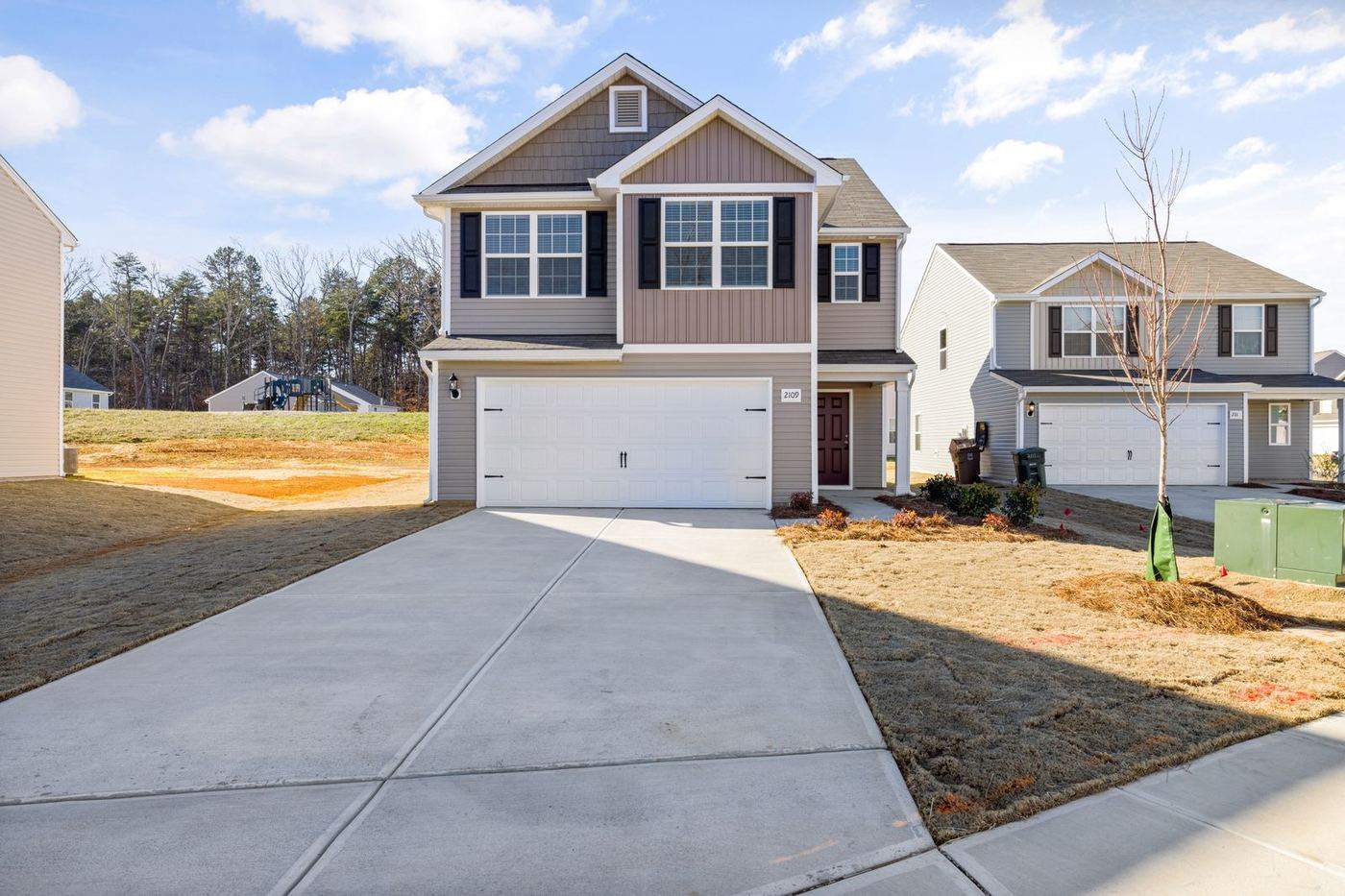
When Replacing Beats Repairing
Most garage doors are worth repairing. Springs, cables, rollers and openers are all parts that get replaced across the life of a door that is otherwise fine. The calculation changes when the sections themselves are the problem.
The clearest signal is rust through the bottom section. That panel sits against the slab, takes standing water after every heavy rain, and rots from the inside out. Once the steel has perforated there is nothing to bolt the bottom brackets to, and the brackets are under full cable tension. A door in that state is not safely repairable.
Creased panels are the next one. A section that has been folded by a vehicle or by the opener forcing a jammed door has lost its rigidity. It will bind in the track and keep throwing rollers no matter how carefully everything is realigned.
Wood doors on the older detached garages around Castle Heights, Sanger Heights and Dean Highland reach a point where adjustment stops working. Decades of Waco humidity followed by triple-digit summers swell and shrink the timber until the stiles pull apart at the joints and the hinges have nothing solid to bite into.
Finally there is the repair frequency test. Three service calls in a year on the same door, each fixing something different, usually means the whole assembly has reached the end of its life together. At that point the money is better spent once.
Choosing a Door for Central Texas
The heat is the design constraint here in a way it is not further north. An unconditioned Waco garage spends June to September well above 100 degrees, and that affects material choice.
Steel
The default, and for good reason. Steel doors are dimensionally stable through heat and humidity, they take a baked finish that holds up to direct sun, and they cost less than everything else. Gauge matters: a 25-gauge door dents if you look at it, while 24 or lower stands up to hail and stray basketballs considerably better. Given where Waco sits in the hail corridor, the heavier gauge is worth the difference.
Insulated steel
A sandwich of steel, polystyrene or polyurethane foam, and a second steel skin. On an attached garage this is the upgrade that pays back in comfort, because it slows the heat moving into the house through the shared wall. It also makes the panel far more rigid and drops the noise level noticeably. Polyurethane gives a better R-value than polystyrene for the same thickness.
Carriage and composite
Steel doors stamped and finished to read as timber carriage doors have become the common choice on renovated properties, and the Magnolia-driven remodeling wave across Waco has made them a familiar look. They give the appearance without the maintenance that real wood needs in this climate.
Full-view aluminum and glass
Anodized frames with frosted or tinted glass, mostly on contemporary builds and on shopfronts and studios. They look excellent and they are the least thermally friendly option available, so on a west-facing attached garage think hard.
What a Proper Installation Includes
The measure comes first, and it is more than the width of the opening. Headroom above the opening determines whether a standard track will fit or whether a low-headroom kit is needed. Backroom, the depth from the opening to the back wall, has to take the horizontal track. Sideroom on each side has to take the vertical track and the drums. Getting any of these wrong is how a door ends up ordered and then not fitting.
The old door and track come out and go away. The jambs get inspected, because rotted timber behind a track bracket is common on older properties and there is no point lag-bolting new track into soft wood.
Then the new sections go in from the bottom up, with hinges and rollers fitted as each section is stacked, track hung plumb and level, and the torsion shaft, drums, cables and spring set up. The spring is sized to the finished weight of that specific door, which is why an insulated door and a hollow door of the same size need different springs.
Last, the door is balanced by hand, the opener is reconnected with its travel limits and force reset for the new weight, and the auto-reverse is tested against an obstruction on the floor.
Details worth asking about
- Panel gauge, and whether it is rated for hail
- Insulation type and R-value if you are going insulated
- Spring cycle rating, and the option to upgrade to high-cycle
- Whether the bottom weatherseal and the jamb seal are included
- Wind load rating, which matters on exposed rural lots
- Finish warranty against fading, given how hard Texas sun is on paint
Keeping the New Door Right
A new door is a fifteen to thirty year purchase if it is looked after and a much shorter one if it is not. The two things that matter are keeping the hardware tight and having the balance checked once a year, both of which are covered under a garage door tune-up. The springs remain the wear item and will need replacing at some point regardless, which is covered on the spring repair page.
Getting a Number
Call with the rough opening width and height, whether it is a single or a double, whether the garage is attached, and what is wrong with the current door. If you already know you want insulated or carriage-style, say so. You get the price before anything is ordered, with no obligation.
Related pages: panel replacement if only one section is damaged, opener repair, and what repairs cost in Waco.