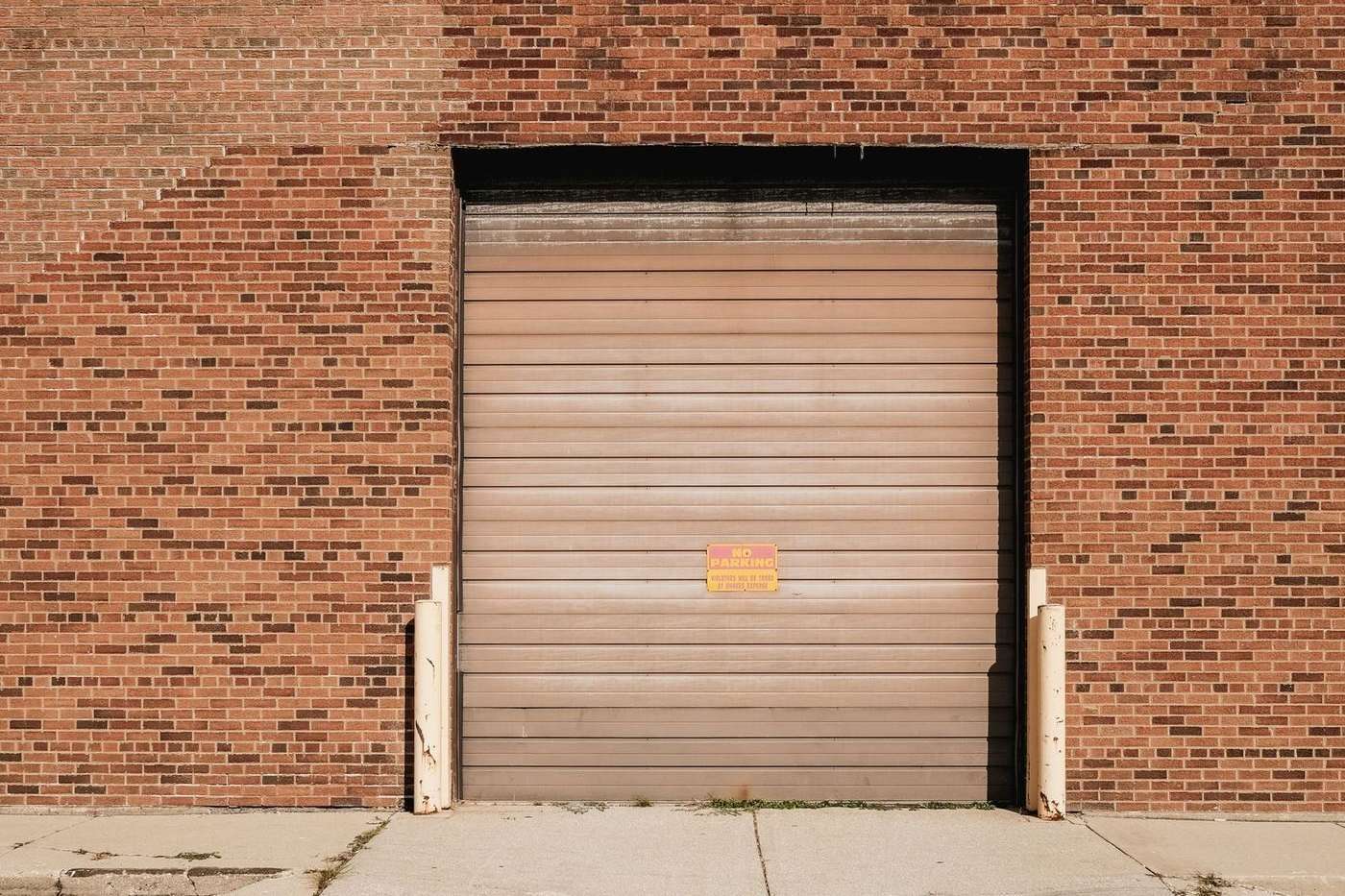
A Commercial Door Is a Different Animal
The failures look similar from a distance and the engineering is not. A residential door opens twice a day and weighs a couple of hundred pounds. A dock door at a distribution building on the I-35 frontage can cycle forty times a shift and weigh several times as much. Everything is sized for that: heavier gauge steel, larger shafts, high-cycle springs, and operators built to run continuously rather than intermittently.
That changes the economics of a breakdown. A house with a broken garage door is inconvenient. A warehouse with a dock door stuck shut has trucks queued and product sitting. The repair that matters is the one that gets the door running and keeps it running, which usually means fixing the reason it failed rather than just the part that broke.
Door Types Around Waco
Rolling steel and roll-up doors
A curtain of interlocking steel slats that coils around a barrel above the opening, with the counterbalance spring inside the barrel. Common on self-storage, service bays, and the light industrial units around Bellmead and East Waco. Typical faults are lost spring tension in the barrel, slats bent by a forklift, worn or spread guides, and failed chain hoists or operators.
Commercial sectional doors
The same basic layout as a residential door in heavier materials, running on track with torsion springs above the opening. Used where insulation or a cleaner appearance matters, such as service shops and light manufacturing. Faults follow residential patterns but on a larger scale: springs, cables, rollers, track and hinges.
Dock doors and levelers
Doors, seals, shelters and the leveler plate that bridges into the trailer. Levelers take a lot of abuse and their hydraulics, springs and lip mechanisms wear. A leveler that will not sit flush is both a productivity problem and a safety one.
Operators
Commercial openers are trolley, hoist or jackshaft units rated for duty cycle. Choosing the wrong class is a common and expensive mistake: a light-duty operator on a high-traffic door burns out repeatedly, and each failure costs more in downtime than the correct unit would have cost in the first place.
Why Commercial Doors Fail Here
Cycle count is the dominant factor. Springs and operators are rated in cycles, and a busy door simply gets through them. A standard assembly on a door running forty cycles a day is finished inside a year. This is the single most common cause of unplanned downtime and it is also the most predictable, which is what makes scheduled replacement worthwhile.
Impact is second. Forklifts, pallet jacks and delivery vehicles hit doors, guides and tracks. A slat bent at the edge will bind in the guide and start deforming its neighbours, so early damage is worth dealing with rather than working around.
Then the Central Texas environment. Summer heat inside an unconditioned warehouse is hard on operator electronics and on the grease in bearings and barrels. Dust off yard surfaces and grain and aggregate operations around McLennan County gets into guides and bearings. Spring hail dents sectional panels the same way it dents residential doors, and high wind on exposed lots along the highway loads doors laterally in a way they are not designed for.
Deferred maintenance amplifies all of it. A door with a loose guide or a slightly out-of-balance curtain runs the operator harder every cycle, and the operator fails long before it should.
Safety and Compliance
Commercial doors carry safety requirements that residential doors do not. Powered doors in workplaces need functioning entrapment protection, which on commercial units usually means a monitored photo eye, a pneumatic or electric safety edge on the bottom bar, or constant-pressure control. Those devices get tested as part of any proper service, not disabled to keep a door running.
Fire doors are their own category. Rolling fire doors are held open by a release mechanism designed to drop the curtain when a fusible link parts or an alarm signals. They require periodic drop testing under NFPA 80, and the test has to be documented. If you have rolling fire doors in a building and no record of a drop test, that is worth raising.
What a service visit typically covers
- Curtain or panel condition, and guide or track alignment
- Spring tension and remaining cycle life
- Bearings, shafts and chain hoists
- Operator duty class, limits and force settings
- Safety edge, photo eye and reversing function tested under load
- Weather seals, brush seals and bottom bars
- Dock leveler operation and hydraulics where fitted
Getting a Door Back in Service
Call with the building type, the door type if you know it, roughly how wide and tall, how often it cycles, and what it is doing now. Whether the door is jammed open or shut matters, because an open dock door is a security and weather exposure as well as a repair.
You get the price before any work starts, with no obligation. Related pages: emergency repair, maintenance and tune-ups, and off track repair.